So i have been away for some time.
No real reason for that.
Mostly, i have been driving cars and developing my own parts, for drifting/performance.
I've repaired some cars, crashed some and i am not nearly done, driving&experimenting, having fun&crashing..
..but i haven't left the rc sailing hobby.
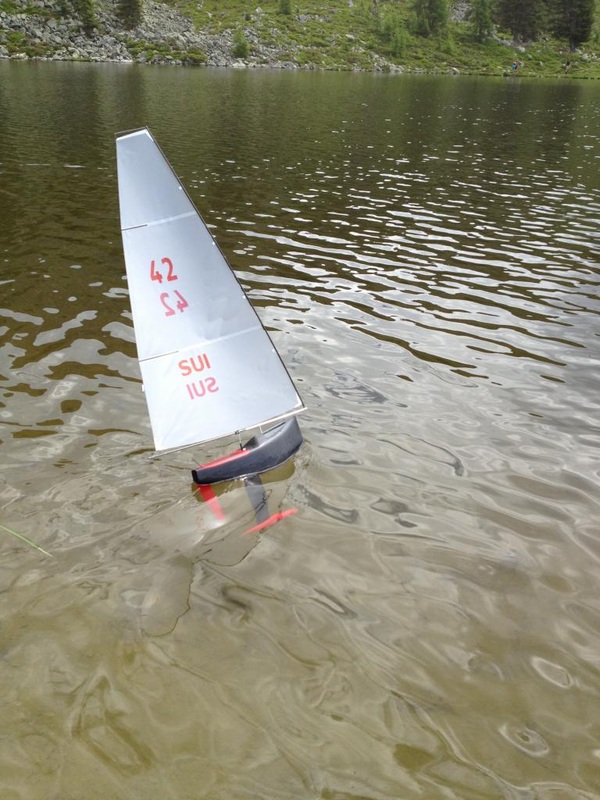
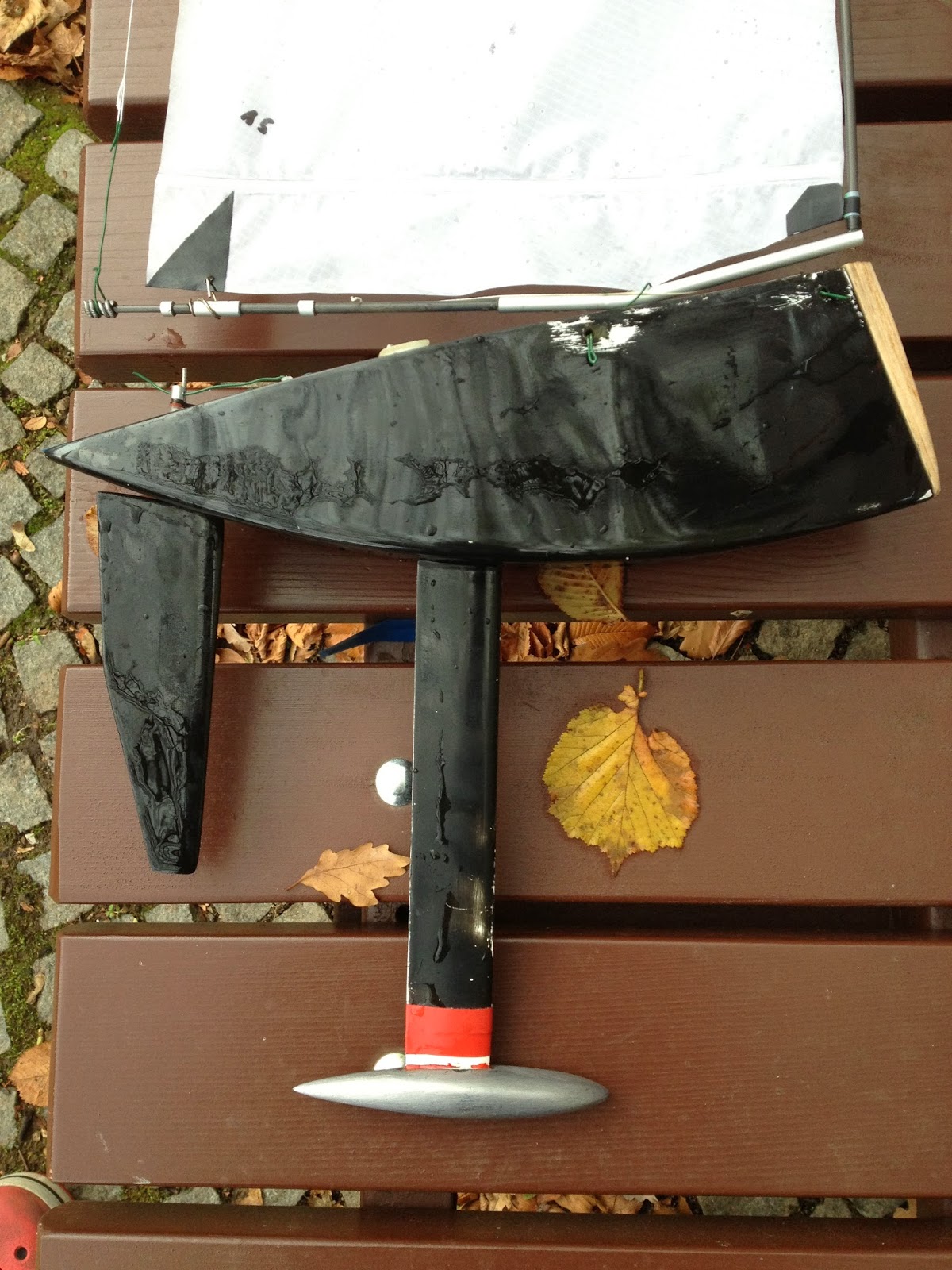
All along i have been sailing evolution and for the last month or two fila 89, with mostly evolution guts(rigg,keel,rudders). Fila 89 is fast, not much faster than evolution, but handles better, gets up to speed faster. It will be raced in the end of august in the model olympics. Trying to take all the top spots from the get go.
So far in the F5g sailing season i have been doing great. Not sure if the boat(evolution) is fast or my sailing is that good :D.
Videos of races follow on yt.
Posts on fila 89 follow.
A super narrow f5g boat follows.
The Jif got it's fair share of sailing too. Rg's are funny as hell, 270g of ballast on a 44cm ultra thin bendy keelfin and a full sailarea 90cm tall rigg make for a boat that is capable of carrying the same rigg up to 15knots, gusting to 20.
Damn that v botom can plan downwind. Not sure if it is actual plnning but is exceeds the hull speed for sure.
Project angeldust got dropped after a desk lamp heated the 3d printed plug so it got deformed.
A post on jif follows.
Footys have been down tho. I made it to the goldcup in Germany, but with prototypes of questionable speed. With noone to compare to, and not as much fun as the faster rg65 and f5g i won't sail footys often in the near future. The goldcup result confirms that.
Footys didn't grow roots in Slovenia, despite me bringing the footys to every rc event i went, giving them and lendind them to anyone interested.
Only two Karo replicas were built, but they weren't really race capable.(yet)
Now i am to busy&have other interests to actively promote footys here in slo. But footys are still great boats, and i will, maybe, take part in future goldcups with a borrowed boat(ICE would be nice, or a Slim perhaps..)
Rc-sailing.net, i have been following the forum for years, before i made my own blog, before i've built my first footy.
Now everytime i try to enter it a vbulletin message appers: "Sorry. The administrator has banned your IP address. To contact the administrator click here" ...i have written (clicked) messages to the admin. But with no reply, not sure why all the devices i use got banned, And i don't think i've done something wrong according to forum rules.
I have yet to try other contacts to reach the admin.
If anyone has any info on the subject please contact me.
From time to time an interesting topic does pop up in the forum, and i would like to be a part of it, or at least read it.
And that would conclude the "july update".
Showing posts with label footy. Show all posts
Friday, July 10, 2015
Monday, November 24, 2014
November update
December is going to be busy!
The way i like it, i hope school won't stand in the way too much.
3 projects are active all to be finished till the end of January.
My father and I decided to take part in the 2015 footy gold cup. More info will be soon avilvable on a dedicated site. For now Thomas(the german footy registrar) is keeping some of us updated on: http://www.footy-sailing.com/forum/showthread.php?tid=308
Footy first:
This is Booyah, my 2015 footy design. It already is the first(known/proove me it isn't) 3D printed footy. Photos follow.
The design is placed into the box longitudinally nose down.
giving it a max lwl of 33cm.
The all up weight should be 450g
But the 3d printed prototype won't be as light. After testing and improovement the boats will be made of composite, to save weight.
The hull has a high prismatic coeff. and plenty of reserve volume. It will carry a classic rigg. The A_rigg will exceed 2000sqcm.
Then come the rg65s,
Some sailors here in Slovenia decided to start building them. 2goths, one own design and two other are looking for boats.(that makes 8, counting the dragonforce seen on regatas, me and father)
It looks like rg65 is going to be the new class here in slovenia.
So i picked up my left behind projects..
the jif65:
which only needs a bulb, and a paint job(to cover porosion)
and the angeldust rg..
..it is a 9/2012 design, designed to be nothing special, following the common rules of thumb know in naval architecture. Only the rigg will be somewhat special.
It is intended to be an allround boat, and a rigg testing platform.
I already made a plug and a hull for it, but it is twisted, so i wont use it. The past two days were spent drawing the sucker in solidworks, refining the rigg and bow sections. Today i have the files ready to start 3d printing the new plug.
It will be hopefully printed by sunday, so i can glue the parts and get the plug ready for moulding.
There is also the new fila which has to be finished till late may. To startthe national championship season.
The battle plan is to get the angeldustplug printed asap.
To finish the footy in the next 14days and trial it against Karo. -then analyse & improove
The jif should be done till new year.
Angeldust should be done till end of january, to test agaist jif and hopefully other rgs.
The way i like it, i hope school won't stand in the way too much.
3 projects are active all to be finished till the end of January.
My father and I decided to take part in the 2015 footy gold cup. More info will be soon avilvable on a dedicated site. For now Thomas(the german footy registrar) is keeping some of us updated on: http://www.footy-sailing.com/forum/showthread.php?tid=308
Footy first:
This is Booyah, my 2015 footy design. It already is the first(known/proove me it isn't) 3D printed footy. Photos follow.
The design is placed into the box longitudinally nose down.
giving it a max lwl of 33cm.
The all up weight should be 450g
But the 3d printed prototype won't be as light. After testing and improovement the boats will be made of composite, to save weight.
The hull has a high prismatic coeff. and plenty of reserve volume. It will carry a classic rigg. The A_rigg will exceed 2000sqcm.
Then come the rg65s,
Some sailors here in Slovenia decided to start building them. 2goths, one own design and two other are looking for boats.(that makes 8, counting the dragonforce seen on regatas, me and father)
It looks like rg65 is going to be the new class here in slovenia.
So i picked up my left behind projects..
the jif65:
which only needs a bulb, and a paint job(to cover porosion)
and the angeldust rg..
..it is a 9/2012 design, designed to be nothing special, following the common rules of thumb know in naval architecture. Only the rigg will be somewhat special.
It is intended to be an allround boat, and a rigg testing platform.
I already made a plug and a hull for it, but it is twisted, so i wont use it. The past two days were spent drawing the sucker in solidworks, refining the rigg and bow sections. Today i have the files ready to start 3d printing the new plug.
It will be hopefully printed by sunday, so i can glue the parts and get the plug ready for moulding.
There is also the new fila which has to be finished till late may. To startthe national championship season.
The battle plan is to get the angeldustplug printed asap.
To finish the footy in the next 14days and trial it against Karo. -then analyse & improove
The jif should be done till new year.
Angeldust should be done till end of january, to test agaist jif and hopefully other rgs.
Monday, November 25, 2013
Footy design - thoughts
I have been involved in the footy class for good two years now. till today i've build some 10 footys.
In 4 design shapes: Spade(4boats, 9hulls), Karo(4boats, 2depron ,2carbon+1 carbon hull), Duck(a Gary Sanderson design) and a "proto" the newest model.
The participation in two footy goldcups gave me the chance to try other peoples footys, amongst which are the infamous ICE, Steri, Ranger etc.
Alongside with footy and other sail class activities i've been studying naval architecture by myself. Finding resources in books like Principles of yacht design, Elements of yacht design(skene), Ted Brewer books, and all the literature and technical papers i could find on the web.
Imo a narrow boat should have a beam of 70-100mm, less is to little, as sail carrying ability is reduced. A very narrow boat will suffer in gusty conditions as it will be hammered by the gusts(if the rigg is set for the luls) or left behind in the luls(if the rigg is ment for gusts)
A wide boat, 135-153mm of beam. These boats are very "powerfull", they carry lots of sail, and usually sport a ballast of around 250g or less, because more ballast doesn't seem to improve righting moment enough to beat the added weight/drag.
The black KARO weighed above 520g, and is the heaviest footy i sailed beside the ICe(can't remember the weight, but it was above 500), and this karo suffered from unresponsivness, and dynamic sinkage due to the forces of sails. With a different hull a heavy boat might perform.
My conclusion is that it is safe to stick below 500g and above 350g, offcourse the boat should be build as light as possible, and ballast should put the boat up to it's full design weight.
at stern it should be 0, or as small as possible to fit the boat in the box with the maximu possible draught.(stern freeboard: 3mm-4cm on my designs and ICE's, urca, steri, duck..)
No speed/angle measurments were made with footys, the only refference could be the internet course, but the conditions are varying and the angles sailed are questionable.
Volume in the front third of the boat is key to downwind performance. Three types of bow are found on footys.
One type has little volume, and a high freeboard, and is designed to be pushed down and cut the water when overpovered downwind(Slim, Karo, Ranger). This type gives stable downwind sailing and is probably just as fast as the moustache found on ices.
Then there is the moustache, seen on ice, awk and bug footys. This bow is pushing the water away from the hull creating lift.
Finally there are footys with lots of volume, these are trying to stay above the water, but usualy don't.
at the moment the sizes are: A+(light air rigg) 2000-2700sqdm, A 1400-2000sqcm, B 900-1400.
c-rigs are rarely used but generally measure for 500-900sqcm, stormriggs are below 500sqcm.
Going above 75 cm of rigg height above deck rises the CE to high, so that should be a good upper limit for all but the A+ rigg.
The sails should cover as much of the boat lenght as possible, meaning that the whole rigg should not be 20cm wide but more like 50cm wide, this balances the boat better for upwind sailing(it gets more directional stability, and is not as twitchy)
High aspect ratio should be kept if possible!
In 4 design shapes: Spade(4boats, 9hulls), Karo(4boats, 2depron ,2carbon+1 carbon hull), Duck(a Gary Sanderson design) and a "proto" the newest model.
The participation in two footy goldcups gave me the chance to try other peoples footys, amongst which are the infamous ICE, Steri, Ranger etc.
Alongside with footy and other sail class activities i've been studying naval architecture by myself. Finding resources in books like Principles of yacht design, Elements of yacht design(skene), Ted Brewer books, and all the literature and technical papers i could find on the web.
This is where my thinking stands today:
Lenght,
The advantage in lwl gain by positioning boat diagonally into the measurment box is minor, not worth trying if technical difficulties appear with generall arangement. But if it suits the boats concept then the boat should be as long as possible.Width,
Generally there are two types of boat: a narrow one and a wide one, not many footys are found in between.Imo a narrow boat should have a beam of 70-100mm, less is to little, as sail carrying ability is reduced. A very narrow boat will suffer in gusty conditions as it will be hammered by the gusts(if the rigg is set for the luls) or left behind in the luls(if the rigg is ment for gusts)
A wide boat, 135-153mm of beam. These boats are very "powerfull", they carry lots of sail, and usually sport a ballast of around 250g or less, because more ballast doesn't seem to improve righting moment enough to beat the added weight/drag.
All-up weight,
I went as low as 300g with spade models, but hit problems with tacking, similar problems have been reported by other builders.The black KARO weighed above 520g, and is the heaviest footy i sailed beside the ICe(can't remember the weight, but it was above 500), and this karo suffered from unresponsivness, and dynamic sinkage due to the forces of sails. With a different hull a heavy boat might perform.
My conclusion is that it is safe to stick below 500g and above 350g, offcourse the boat should be build as light as possible, and ballast should put the boat up to it's full design weight.
Freeboard,
At stem should be as large as possible(7-10cm on boats like SliM, ICE, Steri, Urca and my designs)at stern it should be 0, or as small as possible to fit the boat in the box with the maximu possible draught.(stern freeboard: 3mm-4cm on my designs and ICE's, urca, steri, duck..)
Hull design details,
The prismatic-coefficient should probably be around 0.6, because this suits an overopowered sailboat.No speed/angle measurments were made with footys, the only refference could be the internet course, but the conditions are varying and the angles sailed are questionable.
Volume in the front third of the boat is key to downwind performance. Three types of bow are found on footys.
One type has little volume, and a high freeboard, and is designed to be pushed down and cut the water when overpovered downwind(Slim, Karo, Ranger). This type gives stable downwind sailing and is probably just as fast as the moustache found on ices.
Then there is the moustache, seen on ice, awk and bug footys. This bow is pushing the water away from the hull creating lift.
Finally there are footys with lots of volume, these are trying to stay above the water, but usualy don't.
The most effective seems to be the high bow with lesser volume.
The moustache is also succesful on british designs.
..al bulbs have cg on the same chord lenght of the finn and approximatelly the same shape(something like a naca 64 xx)
It seems that 200-250g work well on wide boats like spade and proto, with the 300g bulb there is already a significant loss in performance upwind, tho the two boats are much more stable when sailing downwind with a heavier bulb. Note: spade was designed for an all-up weight of 380g with a 200g bulb, protos all-up was to be 420 but works best at 375g with a 200g bulb.
The 280g bulb works best on the KARo the 300g bulb can be used for waves and stronger winds, the 350g bulb is to heavy for all of my designs and is waiting for use in a future project.
250and 200g are to light as the 2000sqcm a rigg heels the karo way too much, and tacking in waves is compromised.
Ballast ratios for footys seem to reach from 40% to almost 70% of the all-up weight, light footys are build just as light as the heavier ones, and that is the reason for their lower % of ballast, they simply have less lead.
Generally 50-65% of ballast/all-up weight is a good result.
Two exaples:
Karo, all-up:500g ballsat:280g ratio: 56%(depron boats had a better ratio due to lighter hull)
Spade, all-up:380g ballast 200g ratio:52%
Data fot further comparison here
Note: often it is better to add some weight in order to make the boat more user friendly, e.g. hatches, switches instead of tape.
Karo is sporting a 75sqcm rudder. It's big, bigger than needed but reliable when tacking, waitng at the start etc.
All in all a big rudder does no harm, it reduces leeway, makes handling easier and does not slow the boat down much because of all the sail power available.
Another tip is to have a rudder that is at least 15cm deep(from wl), so when the boat pitch-poles downwind, 2-3cm of the rudder stays in the water and control is not lost.
Ballast(ratio),
Currently i am experimenting with ballasts of 200, 250, 280, 300, 350g, trying to see how they work on different types of hulls, sometimes the all-up weight is to large.....al bulbs have cg on the same chord lenght of the finn and approximatelly the same shape(something like a naca 64 xx)
It seems that 200-250g work well on wide boats like spade and proto, with the 300g bulb there is already a significant loss in performance upwind, tho the two boats are much more stable when sailing downwind with a heavier bulb. Note: spade was designed for an all-up weight of 380g with a 200g bulb, protos all-up was to be 420 but works best at 375g with a 200g bulb.
The 280g bulb works best on the KARo the 300g bulb can be used for waves and stronger winds, the 350g bulb is to heavy for all of my designs and is waiting for use in a future project.
250and 200g are to light as the 2000sqcm a rigg heels the karo way too much, and tacking in waves is compromised.
Ballast ratios for footys seem to reach from 40% to almost 70% of the all-up weight, light footys are build just as light as the heavier ones, and that is the reason for their lower % of ballast, they simply have less lead.
Generally 50-65% of ballast/all-up weight is a good result.
Two exaples:
Karo, all-up:500g ballsat:280g ratio: 56%(depron boats had a better ratio due to lighter hull)
Spade, all-up:380g ballast 200g ratio:52%
Data fot further comparison here
Note: often it is better to add some weight in order to make the boat more user friendly, e.g. hatches, switches instead of tape.
Draught,
should be maximized, the theories about lower wetted surface with a shorter finn don't work in the real world, footys are all about POWER a.k.a. sail carrying ability.Rudder size,
I got good results with 50sqcm and bigger rudders. Some footys use smaller rudders with a very high aspect ratio, and they work well, but if the boat is not perfectly balanced they stall in caotic conditions and the boat loses control.Karo is sporting a 75sqcm rudder. It's big, bigger than needed but reliable when tacking, waitng at the start etc.
All in all a big rudder does no harm, it reduces leeway, makes handling easier and does not slow the boat down much because of all the sail power available.
Another tip is to have a rudder that is at least 15cm deep(from wl), so when the boat pitch-poles downwind, 2-3cm of the rudder stays in the water and control is not lost.
Keel finn,
Due to the low Re footys experience the profile should have a fine entry, the max thickness should be 10-12% of chord, less seems to be risky due to the big leeway angle when accelerating/drifting in light airs.
The planform area on my designs is about 60cm^2(325 size heli rotor blade), this is also the lowest advisable area, less than this does not provide enough sideforce. Leeway increases.
For non chined hulls or hulls with flat sides which provide less "grip" under heel an area of up to 90cm^2 can be used.
A big finn reduces tacking ability, so a boat should have either a small rudder and a small keel finn or both of a bigger area.
The keel finn shoul be set far aft to move the CE back. The bulb CG must match the LCB of the hull or be set for max 15mm aft of the LCB on the vertical axis(the -15mm option will increase weather helm and reduce nosediving down-wind.
Rigg sizes,
The rigg size is increasing from year to year as the boats are refined.at the moment the sizes are: A+(light air rigg) 2000-2700sqdm, A 1400-2000sqcm, B 900-1400.
c-rigs are rarely used but generally measure for 500-900sqcm, stormriggs are below 500sqcm.
Going above 75 cm of rigg height above deck rises the CE to high, so that should be a good upper limit for all but the A+ rigg.
The sails should cover as much of the boat lenght as possible, meaning that the whole rigg should not be 20cm wide but more like 50cm wide, this balances the boat better for upwind sailing(it gets more directional stability, and is not as twitchy)
High aspect ratio should be kept if possible!
Servos/Rx/Battery,
Most of footys use 9g servos for rudder and sheeting.
For the rudder a 4.5g servo is more than enough, saving 5g of weight.
In the past standard servos were used for the sheet, but there is no need for such a heavy servo, aspecially if the boat is sporting balanced una or swing riggs(a nominal power of 2 kg will do)
With classical riggs a "2.5kg" strong servo should be used.
The above is my experience with a 6.5-7cm long servo arm and direct sheeting.
The Rx should be as light as possible to save weight and space.(weight under 10g is exelent, under 25g is good)
The battery can be a 1s lipo of up to 1000mAh, weight approx.: 26g
Four AAA are also commonly used but are abit heavier.
A on/off switch is welcome, to improve user-friendlyness.
To sum up, the above are just some measurable parameters that work with footy class sailboats.
At the moment i am not sure what is the fastest footy type.
Speed seems to come from the overall package. Such a package can be achived using different approaches:
Like ice(design by Roger Stollery), a relatively heavy and beamy design, which handles downwind with moustaches.
The rigg is a swing, with enough power to overcome the high weight
Or SLiM, a Phil Tyler designed and build narrow boat, of medium diplcement. Going downwind with a narrow cutting bow and a efficient una rigg.
More here
At the moment i am not sure what is the fastest footy type.
Speed seems to come from the overall package. Such a package can be achived using different approaches:
Like ice(design by Roger Stollery), a relatively heavy and beamy design, which handles downwind with moustaches.
The rigg is a swing, with enough power to overcome the high weight
Or SLiM, a Phil Tyler designed and build narrow boat, of medium diplcement. Going downwind with a narrow cutting bow and a efficient una rigg.
More here
Monday, November 4, 2013
KARO
Karo, my second own design footy survived it's first season.
It posted a good result(7th) at the goldcup, and was the basis for classic rigg development.
It is also my first panel build boat ever, and my first boat intended for easy building(karo is winner of the richardson trophy, an award for simplicity and promotion of fun).
now the black boat was refurbished into it's original/optimised form:
This is KARO's final shape, it will remain like this.
It's a competitive boat, that is oriented for windy days. I am looking forward to sail her at some future footy regatas.
a complete set of pdf plans will be free to download soon.
It posted a good result(7th) at the goldcup, and was the basis for classic rigg development.
It is also my first panel build boat ever, and my first boat intended for easy building(karo is winner of the richardson trophy, an award for simplicity and promotion of fun).
now the black boat was refurbished into it's original/optimised form:
| the new 285g bulb seems to work best with the 1500sqcm a rigg |
| the paint is tired, the hooks for a classic rigg remain on the boat also a new balsa bumper is in place |
| all up |
It's a competitive boat, that is oriented for windy days. I am looking forward to sail her at some future footy regatas.
a complete set of pdf plans will be free to download soon.
Tuesday, October 22, 2013
proto footy update
The unarigg was moved 2cm forward, now the boat has better helm balance at bigger angles of heel, and is stable while nosediving downwind.
The 200g ballast is a good choice for this hull. but a 250g bullb will be introduced, because bigger riggs(more than 1500cm2) will also be used on this boat.
I also tried it with the 350g bulb of of a KARo, but that was too much, the boat didn't want to heel, and with no grip from the chine leeway increased. Responsivnes was also compromised.
Today the wind went from 2-3 knots to some 7-8, A+ to A rigg conditions.
More conclusions will be drawn when i get a chance to sail against a KARO, or other footys..
here are a couple clips:
and with the 350g bulb:
The 200g ballast is a good choice for this hull. but a 250g bullb will be introduced, because bigger riggs(more than 1500cm2) will also be used on this boat.
I also tried it with the 350g bulb of of a KARo, but that was too much, the boat didn't want to heel, and with no grip from the chine leeway increased. Responsivnes was also compromised.
Today the wind went from 2-3 knots to some 7-8, A+ to A rigg conditions.
| Autum is in full swing, later the wind blew the leaves away, luckly |
| The light conditions were just to demanding for my Iphone today |
| downwind is now stable, this boat does lose more speed than a KARO does when nosediving |
| reaching is good, even when overpowered. |
here are a couple clips:
Friday, October 11, 2013
new footy prototype
Yesterday a new design went waterbourne,
It is a fat design, made out of 4 3mm depron panels for easy building.
It is placed longitudinaly and nose down into the box, 153mm wide at stern and has a 32cm lwl.
The bulb is 200g, total weight is 380g. The updated KARo a rigg is used.
The goal for this boat was to create a light weight(sub400g) boat, which is beamy, with lots of volume, so it can go over the waves(no through them like KARo does), i decided to go for the 4 panels so i can modify the hull quickly, and so that some one will decide to build it cause it is a 4h project if u already have a rigg.
templates follow.
It goes quite good already. I will shift the rigg forward tho for a more neutral helm when heeled(the 12% lead of CE to CLR is not enough, there is some weather helm, too much for my liking. The hull is very stable obviously(lots of volume is shifted forward so the entrance angle is quite bad but that doesn't seem to affect speed.
Upwind the chine bites, and the boat is shaky over the little waves, i don't like that.. ..but it seems faster upwind than a karo. Downwind it has a problem.. ..it is so light that it gets thrown over it's bow and onto its side, it takes too long to get to the old course again.. ..a possible solution to that is a longer rudder. But when not heavily overpowered it goes well.
Tomorrow it will be in the water again with the changes. There are also some leaks that have to be fixed.
After i am happy with the balance upwind and downwind is solved this proto will be taken apart for templates.
clip
It is a fat design, made out of 4 3mm depron panels for easy building.
It is placed longitudinaly and nose down into the box, 153mm wide at stern and has a 32cm lwl.
The bulb is 200g, total weight is 380g. The updated KARo a rigg is used.
The goal for this boat was to create a light weight(sub400g) boat, which is beamy, with lots of volume, so it can go over the waves(no through them like KARo does), i decided to go for the 4 panels so i can modify the hull quickly, and so that some one will decide to build it cause it is a 4h project if u already have a rigg.
templates follow.
It goes quite good already. I will shift the rigg forward tho for a more neutral helm when heeled(the 12% lead of CE to CLR is not enough, there is some weather helm, too much for my liking. The hull is very stable obviously(lots of volume is shifted forward so the entrance angle is quite bad but that doesn't seem to affect speed.
Upwind the chine bites, and the boat is shaky over the little waves, i don't like that.. ..but it seems faster upwind than a karo. Downwind it has a problem.. ..it is so light that it gets thrown over it's bow and onto its side, it takes too long to get to the old course again.. ..a possible solution to that is a longer rudder. But when not heavily overpowered it goes well.
Tomorrow it will be in the water again with the changes. There are also some leaks that have to be fixed.
After i am happy with the balance upwind and downwind is solved this proto will be taken apart for templates.
clip
Friday, September 27, 2013
Race in velenje
On saturday at 11 am we arrived a the lake, no wind.
Seascapes were sceduled to have a regatta too. But the clouds wouldnt budge.
| after the training sessions 8 races were sceduled, with a 30 min pause for footys |
| I managed to be dominant on the startline, but #93 is a boat specialized for light winds, weighing 400g lesser than Fila and ofcourse faster in the drifters. |
My father was sailing #88, blue life, the boat needs a bigger rudder for beter manouvering.
He finished 6th, and was quite happy :)
I was 2nd, good, but not good enough, as i have to win the last race of the series to have a chance of taking the national championship.
#93 stands 3wins 1second
me, #87 2wins 1 second
The last race in the season is comming in a month and a half.
Friday, September 20, 2013
Velenje regatta
Tomorrow is the 5th round of our national championships in F5g class. Me and father are going.
But this won't be just a race but also a chance to promote the footy class.
Here is a part of the dellegation, Fila my F5g boat, 2 Karos, 1 Duck, 2 Spade footys(the one far left) and the other is at my father's. Duck sits in the measurment box, and not all riggs are shown on the pic.
Other competitors have agreed to use their recievers in footys so we can have a quick 5 boat regatta on a short course.
More after the race.
But this won't be just a race but also a chance to promote the footy class.
Here is a part of the dellegation, Fila my F5g boat, 2 Karos, 1 Duck, 2 Spade footys(the one far left) and the other is at my father's. Duck sits in the measurment box, and not all riggs are shown on the pic.
Other competitors have agreed to use their recievers in footys so we can have a quick 5 boat regatta on a short course.
More after the race.
Duck footy
Today it was time to finally take out the Duck, a footy designed by G. Sanderson, as far as i know only three hulls were made. There is little data available on the net, but the boat was featured in this article: http://footy.rcsailing.net/articles/my152/footy_design.php
Mr. Sanderson sent me some basic measurments so i could complete the hull, which he sent me almost a year ago, after we met in Sestriere at the 2012 footy gold cup.
Clip 1
clip2
Overall i am very pleased with the boat, it seems to be fast in all directions. The wegiht is 360g + rigg(40gmax), which is quite light. Ballast is 200grams.
It will be used for speed and angle comaprison along side with my KAROs for future footy projects.
If interest for footys rises here in Slowenia it will be at the front end of the footy fleet for sure!
Thanks to Mr. Gary Sanderson for giving me the chance to finish one of his hulls!
Mr. Sanderson sent me some basic measurments so i could complete the hull, which he sent me almost a year ago, after we met in Sestriere at the 2012 footy gold cup.
| The rudder is made like suggested by the photos, her designer sent me, the finn is a 10% chord thicknes helicopter blade |
| the keel box is 1cm longer than the finn so it's position can be adjusted, the hole in the deck accomodates my 4x8cm servo module, and acts as a hatch |
| Two balljoints hold the rudder, and a piece of brass tubing secures it with friction |
| Here is the boat with the karo a rigg |
| I didn't do any calculations on this model, so i was unsure of it's balance, but right away it became obvious that upwind balance was bang on! |
| But nothing is perfect, when nosedivng downwind control was lost at times, because of the rudder which is to short. |
| Eventually the rigg was changed to the new a rigg with 1500cm2 |
| The CE is recessed some 10mm compared to the original rigg, but that didn't seem to affect the upwind balance. |
clip2
Overall i am very pleased with the boat, it seems to be fast in all directions. The wegiht is 360g + rigg(40gmax), which is quite light. Ballast is 200grams.
It will be used for speed and angle comaprison along side with my KAROs for future footy projects.
If interest for footys rises here in Slowenia it will be at the front end of the footy fleet for sure!
Thanks to Mr. Gary Sanderson for giving me the chance to finish one of his hulls!
Sunday, September 8, 2013
Flaps on KARO footy and over-powering the a rigg
We had a few days of good wind here in Maribor, SLO.
The wind on the pond in the city park was gusting up to some 10-12knots and shifty.
the trimm, the pivot point of the jib was set 4cm forward.
a crappy clip:
It seems like the vertical down force created by the sails is quite big in relation to the available volume in the hull. The boat gets pushed down upwind.
Obviously a solution for the next evolution of the karo is more volume, but i have also tried flaps below:
I noticed that leeway was increased with flaps. That was because the flow separated of the flaps and the hull, and then reatached at the end of the first half of the hull.
The midle third of the hull is the part where the chine provides the most "grip" upwind, so i cut the last 3 cms of the flaps, so the flow would separate earlier(from the flaps), and reattach on the hull after the first third so the whole middle third is immersed.
Below is the clip of sailing with flaps, if the flaps do any good will be confirmed when i get another chance to put both KAROs in the water.
The wind on the pond in the city park was gusting up to some 10-12knots and shifty.
the trimm, the pivot point of the jib was set 4cm forward.
a crappy clip:
Obviously a solution for the next evolution of the karo is more volume, but i have also tried flaps below:
I noticed that leeway was increased with flaps. That was because the flow separated of the flaps and the hull, and then reatached at the end of the first half of the hull.
The midle third of the hull is the part where the chine provides the most "grip" upwind, so i cut the last 3 cms of the flaps, so the flow would separate earlier(from the flaps), and reattach on the hull after the first third so the whole middle third is immersed.
| the cut flaps |
Below is the clip of sailing with flaps, if the flaps do any good will be confirmed when i get another chance to put both KAROs in the water.
Friday, July 19, 2013
KARO, the big rigg
The biggest rigg since my footy affair was tested, it is a 2000sqcm rigg, the mast height is 75 cm, the AR of the main sail is somewhere around 2.6 and jib AR is 3.
| the vang is simplified as much as possible, 4 hole tensioners were made because three hole ones(both made of 2mm plexi glass) were releasing tension |
| The problem to solve is the mast crane, it is preventing the upper 3-4cms of sail to open properly |
Today i was sailing on the pond in the park, where shifty conditions prevail. Acceleretaion of the boat is nearly instant, upwind there is a bit of weatherhelm, maybe too much for my taste but totaly sailable.The mast has to be bend forward as the luff pocket on the main has no curve. Heeling is logically increased with the sailarea, but the boat handles it well, the problem is the vertical downforce sinking the boat alot, thats about 4cm at bow, sort of increasing the displacement drastically, i will write more about that in the upcoming hull design post. Nosediving, today some 10+ knot gusts were present and it seems that the classic rigg only sinks the bow to a certain degree and no more, and thats superb! it means that i can easily sail a heavily overpowered footy.
Below is a crappy clip, the white sails and the bright sun make the phone to over-expose the boat...
The plan for the weekend is to make a new main with a shorter foot, reducing the weather helm.
And testing the big rigg in real(not so pondy, shifty and unfair)conditions to se the real performance.
Subscribe to:
Posts (Atom)